
POMPEI
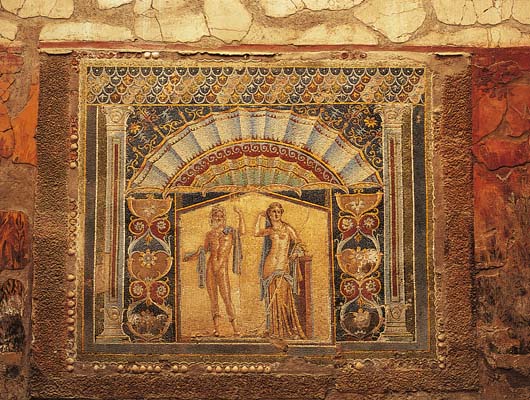
 Pompeii
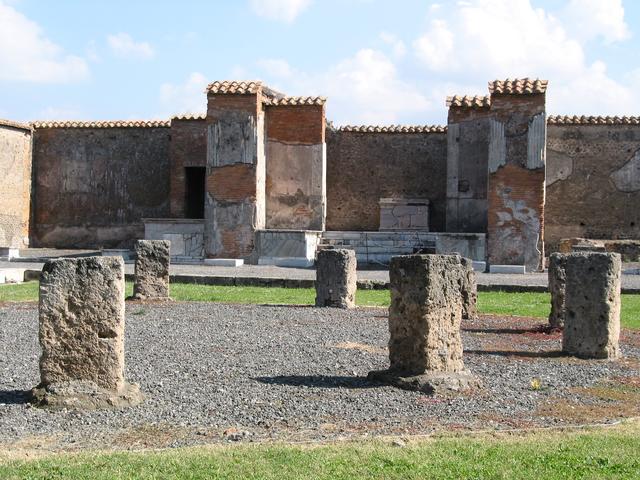
is Italy’s most famous archaeological site and with good reasons: With an
excavated area of 44 hectares, Pompeii is inique in the world. No other
ancient town has been brought to light so completely.Discovered by chance
during the excavations for a canal in the 16th century, the ruins
of Pompeii were not recognized for what they were until larger explorations
in the 18th century; scientific excavations started only at the
end of the 19th century, but continued steadily until most of the
ancient town was uncovered. Based on the recognition of the city walls –
only partly excavated – Pompeii covered an area of 66 hectares. Originally
an Etruscan and then a Sannite town, it was colonized by the Romans in 80
B.C.
Pompeii
is Italy’s most famous archaeological site and with good reasons: With an
excavated area of 44 hectares, Pompeii is inique in the world. No other
ancient town has been brought to light so completely.Discovered by chance
during the excavations for a canal in the 16th century, the ruins
of Pompeii were not recognized for what they were until larger explorations
in the 18th century; scientific excavations started only at the
end of the 19th century, but continued steadily until most of the
ancient town was uncovered. Based on the recognition of the city walls –
only partly excavated – Pompeii covered an area of 66 hectares. Originally
an Etruscan and then a Sannite town, it was colonized by the Romans in 80
B.C.
In Roman times, Pompeii was an important industrial and commercial town, with a complex layered society, which is reflected in the urban structures on view today.
Besides elegant villas belonging to the richer citizens, there were blocks of more modest housing, as well as many shops, restaurants, hotel and public buildings. The eruption covered Pompeii with volcanic ash and pumice stone, a much lighter material than in Herculaneum. As a result, the survivors of the disaster were able to retrieve some of their possessions, leaving less behind than in other locations. This also made it easier for the site to be axcavated – and, unfortunately looted – in more recent centuries. You will recognize the different excavation styles: in the 19th and early 20th century, precious mosaics and frescoes were carefully detached and displayed in museums; the contemporary approach is to leave everything in situ to maximize visitors’ experience of the place as it must have been.
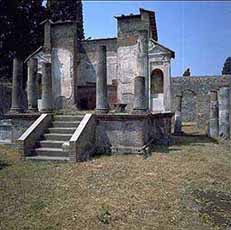 Walk with us through ancient streets to visit the Villa of the Mysteries,
the House of the Faun and of the Vettii brothers. Discover baths, basilicas, temples,
theatres, private homes, the amphitheater, even the palestra where gladiators trained for
the arena.
Walk with us through ancient streets to visit the Villa of the Mysteries,
the House of the Faun and of the Vettii brothers. Discover baths, basilicas, temples,
theatres, private homes, the amphitheater, even the palestra where gladiators trained for
the arena.
For those who choose to travel with us by private car, we'll also visit the so-called "Villa of Poppaea," the second wife of the emperor Nero. It is located at Oplantis, which was a holiday resort area for the rich who had their vast suburban villas built here in order to live in sumptuously decorated surroundings far from the noise and inconvenience of Pompeii. Amongst these villas stands one whose size and rich mural decorations set it apart from all of others. The "Villa of Poppaea" is the largest and most luxurious suburban villa so far brought to light.
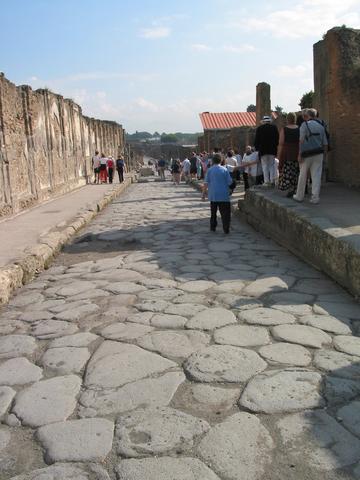
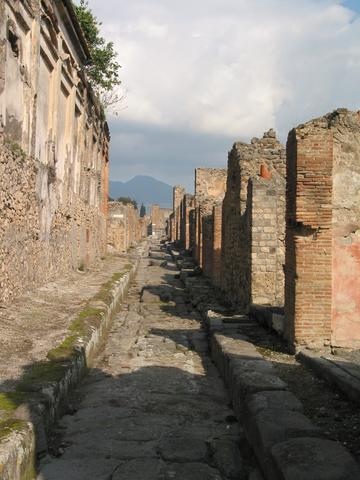
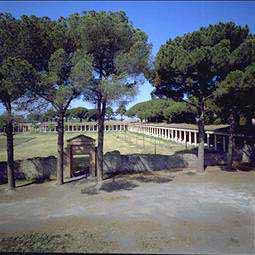 The town, built on an elliptical plan, was divided by a regular network of
streets intersecting at right angles. The houses generally had two floors, with a garden
or internal courtyard, and were decorated by architectural coverings and paintings of fine
quality.
The town, built on an elliptical plan, was divided by a regular network of
streets intersecting at right angles. The houses generally had two floors, with a garden
or internal courtyard, and were decorated by architectural coverings and paintings of fine
quality.
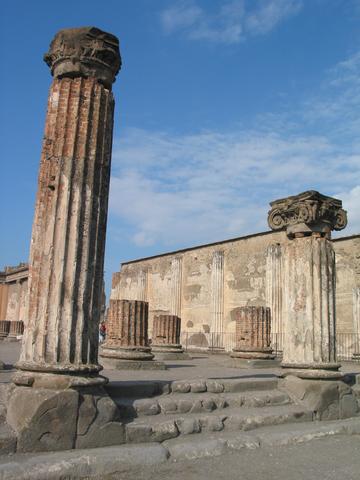
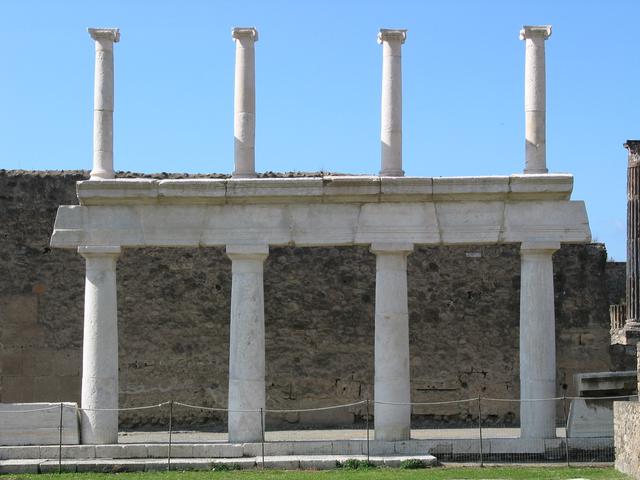
The Forum, a vast rectangular square, was the fulcrum of the political, religious and
economic life of the town, and is bordered by the main public buildings.
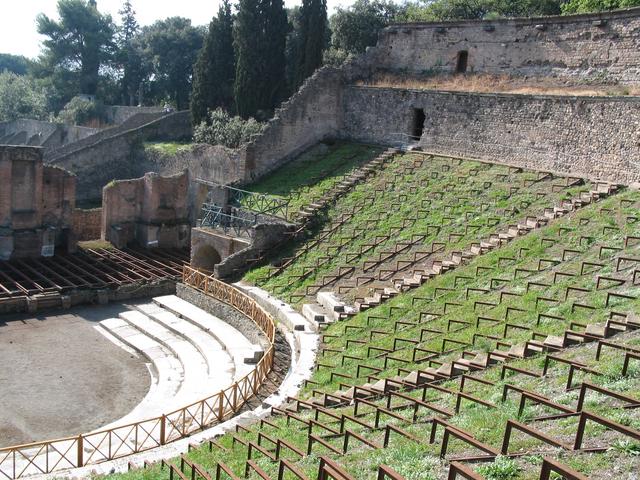
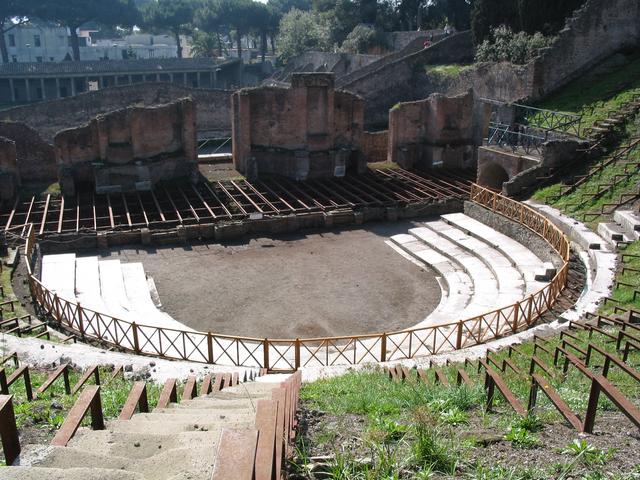
There are two theatres: the Odeon, built between 80-75 B.C., used for
musical recitals and mime-shows, and the Large Theatre, with seating for 5,000 spectators,
which dates from the Hellenistic period (200-150 B.C.). The largest baths were the Stabian
Baths, built in the Samnite period and reconstructed in the Imperial period. The stucco
decoration, dating from the Flavian period, is some of the finest surviving.
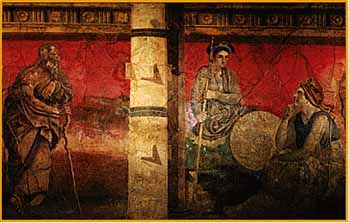
The many houses of remarkable beauty include the House of the Vettii, one of the most
interesting examples of a rich merchant's house, while the Villa of Mysteries is perhaps
the most important building in the whole of Pompeii. Its most interesting feature is a
cycle of paintings dating from the 1st century B.C. which decorate the walls of one of the
rooms in the centre of the house.
Many other buildings are worth special attention. These include: the House of Menander,
the House of Loreius Tiburtinus, the House of the Golden Cherubs, the House of the Faun,
the Villa of Diomedes and the Amphitheatre.
Essentials
GETTING
THERE By Train The Circumvesuviana Railway departs Naples every half hour from Sorrento. A
round-trip fare is 2.00L ($1.60); trip time is 45 minutes each way. There's an entrance
about 50 yards from the railway station at Villa Misteri.By Bus At the railway station in Pompeii, bus connections take you to the
entrance to the excavations.
By Car To reach Pompeii from Naples, take the 13 mile drive on the
autostrada to Salerno.
PHOTO GALLERY





 Information Request